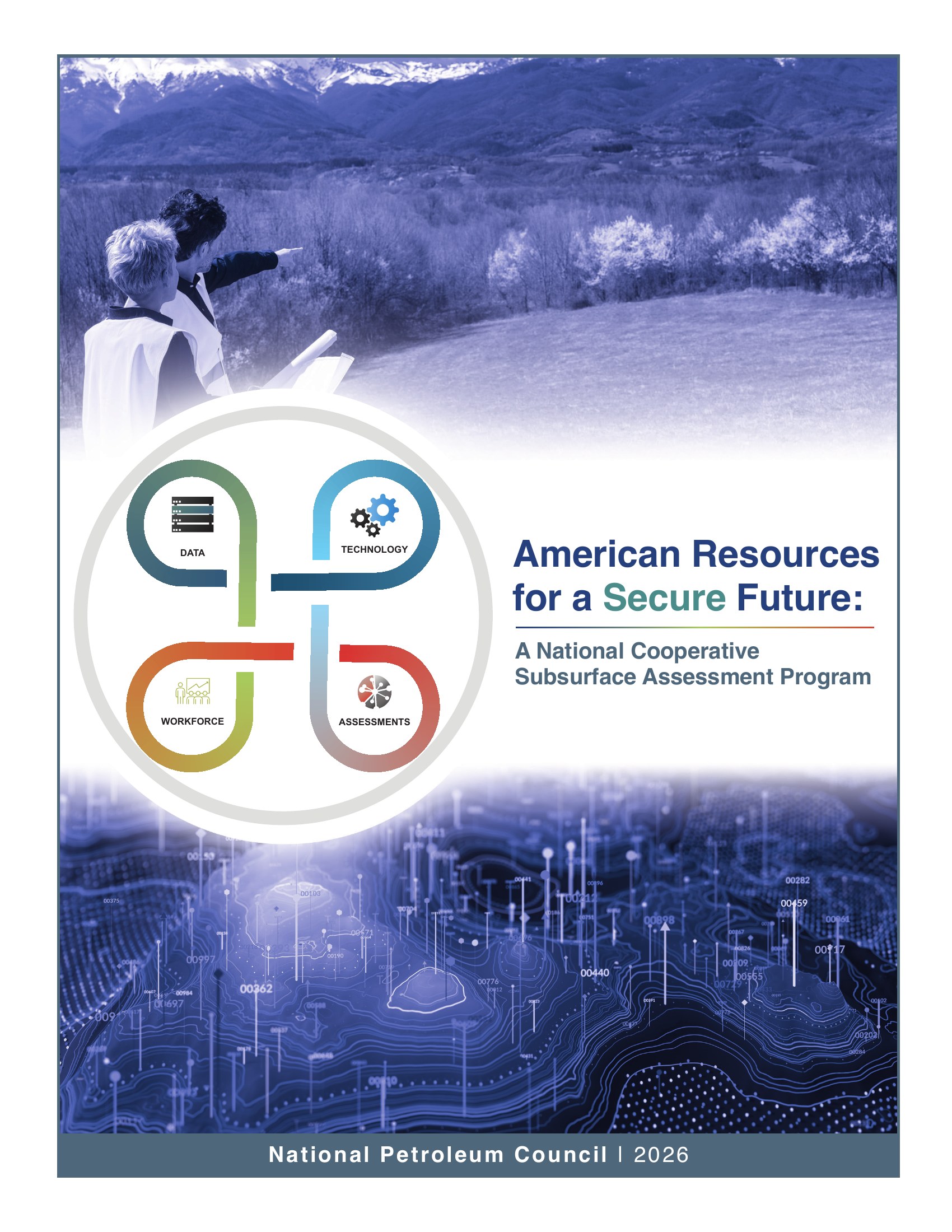
American Resources for a Secure Future: A National Cooperative Subsurface Assessment Program
(2026)
About this Report
The United States’ energy future—from geothermal, nuclear, wind, solar, and hydropower to oil and natural gas—depends on the subsurface. Yet despite its strategic importance, the subsurface remains one of the nation’s most undercharacterized assets. As demand grows for secure domestic energy, critical minerals, storage capacity, and water resources, better understanding the subsurface will be essential to reducing uncertainty, unlocking domestic resources, guiding investment, minimizing environmental impacts, and supporting responsible development.
This study examines the interplay between government-led assessments, which generate foundational geologic data and regional-scale evaluations, and industry assessments, which build on that public foundation through targeted, high-resolution analysis of specific assets. It identifies cross-cutting gaps that limit the nation’s ability to fully understand and realize its subsurface potential, including incomplete baseline datasets and loss of legacy data, limited integration across resources and jurisdictions, assessment approaches that have not kept pace with emerging technologies and resources, and shortages in the skilled workforce needed for modern subsurface characterization. To address these gaps, the study advances nine cross-sectoral recommendations, together with resource-specific actions. Together, they support an overarching recommendation that Congress establish a National Cooperative Subsurface Assessment Program that builds on existing federal and state authorities to strengthen U.S. energy security, economic competitiveness, environmental stewardship, and responsible management of the nation’s subsurface resources.
About the Study Participants
The study was directed by a study committee composed of senior leaders from the industries of oil and gas, critical minerals, geothermal, hydrogen, geologic carbon storage, and groundwater, along with representatives from state agencies, universities, Tribal organizations, consulting services, and public interest and nonprofit organizations. The Coordinating Subcommittee oversaw the development of scope areas, supported by Task Groups focused on specific technical and policy issues. This structure is designed to ensure that a broad range of expertise and perspectives are incorporated into the analysis, deliberations, and recommendations of the NPC.
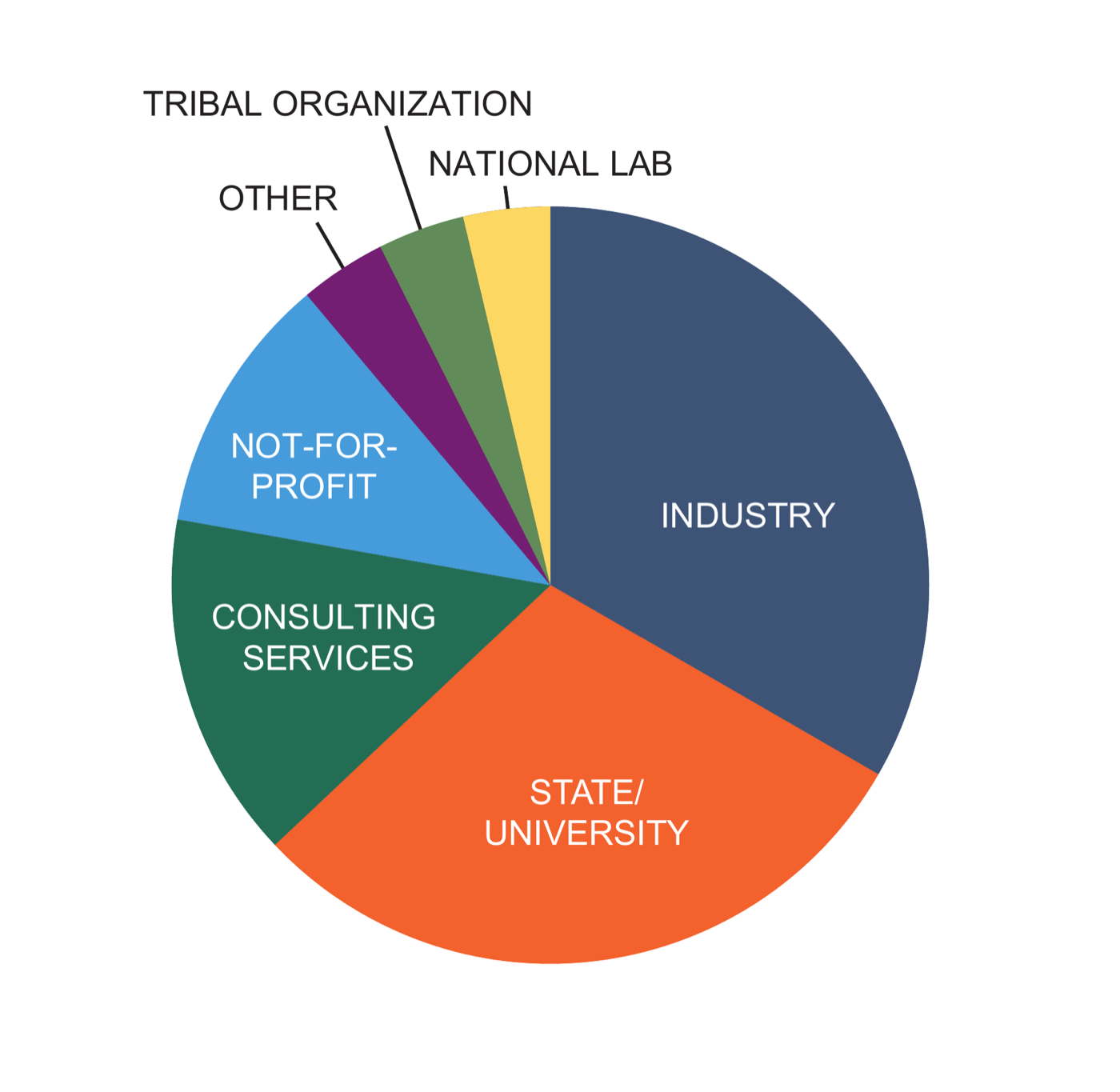
Representation by Sector on the Study Committee, Coordinating Subcommittee, and Task Groups.
About the National Petroleum Council
The National Petroleum Council (NPC) is an organization whose sole purpose is to provide advice to the federal government. At President Harry Truman's request, this federally chartered and privately funded advisory group was established by the Secretary of the Interior in 1946 to represent the oil and natural gas industry's views to the federal government: advising, informing, and recommending policy options. During World War II, under President Franklin Roosevelt, the federal government and the Petroleum Industry War Council worked closely together to mobilize the oil supplies that fueled the Allied victory. President Truman's goal was to continue that successful cooperation in the uncertain postwar years. Today, the NPC is chartered by the Secretary of Energy under the Federal Advisory Committee Act of 1972, and the views represented are considerably broader than those of the oil and natural gas industry.
Council members, about 200 in number, are appointed by the Energy Secretary to assure well-balanced representation from all segments of the oil and natural gas industry, from all sections of the country, and from large and small companies. Members are also appointed from outside the oil and natural gas industry, representing related interests such as large consumers, states, Native Americans, and academic, financial, research, and public-interest organizations and institutions. The Council provides a forum for informed dialogue on issues involving energy, security, the economy, and the environment of an ever-changing world.